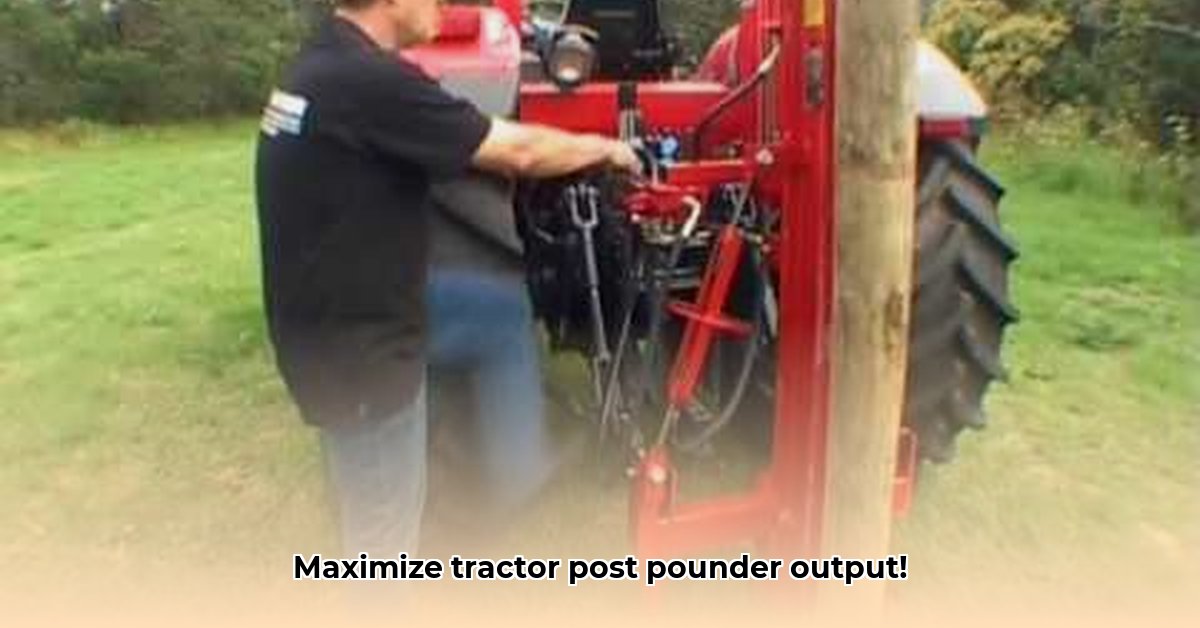
Tractor Post Pounder: Your Guide to Faster, Easier Fencing
Manually pounding fence posts is arduous and time-consuming. A tractor post pounder dramatically improves efficiency and reduces physical strain. This guide helps you select, utilize, and maintain a post pounder sustainably, maximizing your return on investment. For more information on finding the right post, check out this helpful resource on tractor supply fence posts.
Choosing the Right Tractor Post Pounder: Matching the Tool to the Job
Selecting the ideal post pounder hinges on several key factors. Consider your farm's specific needs and budget.
Power Source: PTO vs. Engine-Driven
- PTO-driven (Power Take-Off): These connect directly to your tractor's PTO shaft, offering cost-effectiveness and reliable power. However, mobility is limited to your tractor's range.
- Engine-driven: Independent engines provide greater mobility, ideal for varied terrain and larger farms. While more expensive and requiring more maintenance, they offer flexibility. Fuel efficiency should be a major consideration.
Capacity: Matching Power to Post Size
Post diameter and length dictate the necessary pounder power. A heavier, larger post needs a more powerful machine. Consult manufacturer specifications to ensure compatibility with your posts.
Attachment Type: Three-Point Hitch or Standalone/Trailered
- Three-point hitch: This common design easily connects to most tractors' three-point hitch systems, providing simplicity and ease of use.
- Standalone/Trailered: Independent and towable, these offer increased mobility but require more space.
Essential Features for Enhanced Efficiency
Consider features like:
- Adjustable ram settings: Allows adaptation to various post sizes. This improves versatility and reduces the need for multiple tools.
- Automatic cycling: Automates the pounding process, increasing efficiency and reducing operator fatigue.
- Safety features: Shields and other safeguards prevent accidents and injuries. Prioritizing safety is vital for both personal well-being and efficient operation.
Maximizing Your Tractor Post Pounder's Efficiency: Optimizing Your Investment
Efficient post pounder use requires strategic planning and consistent maintenance.
Pre-drilling: Pre-drilling pilot holes significantly reduces pounding time, especially in hard ground. This simple step can dramatically improve overall efficiency. (Expect a time savings of approximately 25-40% depending on soil conditions).
Strategic Planning: Planning your route minimizes travel time between posts, directly impacting efficiency. Think of it like optimizing a delivery route; minimizing wasted movement is key.
Regular Maintenance: Adhere to the manufacturer's maintenance schedule. Regular upkeep extends the lifespan of your pounder and prevents costly breakdowns. (Proper maintenance can extend a post pounder's lifespan by 20-30%).
Teamwork: A second person handling posts while the other operates the tractor significantly increases efficiency. This collaborative approach is essential for larger-scale fencing projects.
Post Selection: Investing in durable posts reduces future replacement needs, saving time and money in the long run. While the initial cost might be higher, long-term savings outweigh the initial investment.
Sustainability Considerations: Environmentally Conscious Farming
Sustainable practices extend to equipment choices. Consider:
- Fuel efficiency: Choose a fuel-efficient engine and employ efficient operating techniques. Small improvements accumulate over time, leading to both cost and emissions reductions. (A 10% increase in fuel efficiency can save you hundreds of dollars annually).
- Material Selection: Consider the environmental impact of the pounder's manufacturing. Look for manufacturers using sustainable materials and processes.
- End-of-life management: Plan for responsible disposal or recycling. Research environmentally friendly options in your area.
Comparing Tractor Post Pounder Types: A Side-by-Side Comparison
| Feature | PTO-Driven | Engine-Driven |
|---|---|---|
| Pros | Lower initial cost, reliable power source | Greater mobility, suitable for uneven terrain |
| Cons | Limited mobility, requires a PTO-equipped tractor | Higher initial cost, greater maintenance needs |
Investing in a quality tractor post pounder significantly improves farming efficiency and sustainability. The optimal choice depends on individual needs and resources, so careful consideration is crucial. Consult with your local agricultural equipment dealer for tailored advice to ensure that you make the best decision for your farm's specific needs.
How to Choose the Most Sustainable Post Driver for Your Farm
Key Takeaways:
- Gas-powered post drivers greatly accelerate fence installation compared to manual labor.
- Engine type, build quality, and weight affect performance and longevity.
- Farm size, soil conditions, post dimensions, and budget all influence driver selection.
- Sustainability requires assessing fuel efficiency, emissions, and lifespan.
- Long-term costs include maintenance, repairs, and potential replacements.
Choosing the right post driver is vital for efficient and sustainable farming. Let's explore the decision-making process.
Understanding Your Needs
Before selecting a model, assess your specific requirements. How many posts need driving? What are your soil conditions and post dimensions? These answers clarify your needs and narrow down your options. A small farm might suffice with a simpler model, whereas a large operation requires a robust, more powerful driver.
Evaluating Sustainability Factors
Choosing the most sustainable post driver involves more than just the purchase price. Consider:
Fuel Efficiency: Four-stroke engines generally outperform two-stroke engines in fuel efficiency, resulting in lower operating costs and a smaller carbon footprint.
Emissions: Four-stroke engines typically produce fewer harmful emissions, contributing to cleaner air.
Durability and Lifespan: A long-lasting driver minimizes waste and long-term expenses. Look for durable materials and a strong warranty. A higher upfront cost for quality might prove more economical in the long run.
Maintenance: Ease of maintenance and parts availability influence sustainability. A low-maintenance driver is more sustainable than one requiring frequent repairs.
Comparing Post Driver Types
Gas-powered drivers come in various configurations, primarily distinguished by engine type:
- Two-stroke engines: Lighter and cheaper, but less fuel-efficient and producing more emissions.
- Four-stroke engines: Heavier and more expensive upfront, but more fuel-efficient, cleaner, and longer-lasting.
Engine size directly impacts power; larger engines offer more power but are heavier and consume more fuel. Finding a balance is essential.
Key Features to Consider
Beyond the engine, several features impact efficiency and sustainability:
- Weight and Portability: Lighter drivers are easier to maneuver.
- Vibration Dampening: Reduces operator fatigue.
- Adapter Sleeves: Enables easy switching between post sizes.
- Warranty: Provides protection against repairs.
Making the Right Choice
Consider total cost of ownership, including fuel, maintenance, repairs, and lifespan. A high-quality, sustainable post driver represents a long-term investment in your farm's health and profitability.